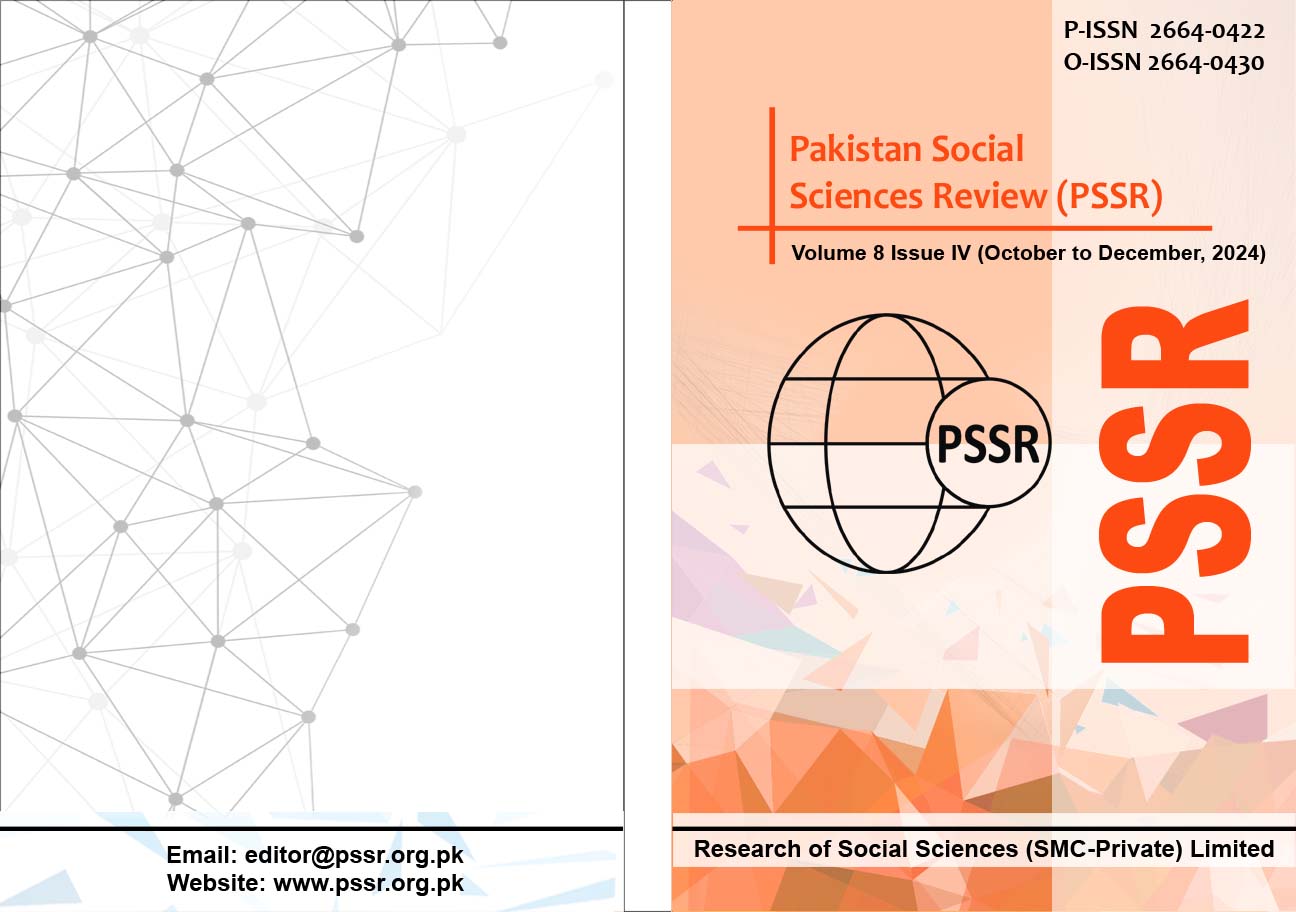
Exploring Reading Anxiety among EFL Learners at Intermediate Level: A Study Conducted in Rahim Yar Khan
DOI:
https://doi.org/10.35484/pssr.2024(8-IV)49Keywords:
Anxiety Reduction Strategies, EFL Learners, English Speaking Proficiency, Language Learning, Language Teaching Methodology, Reading AnxietyAbstract
This study explores the influence of reading anxiety on the English speaking proficiency of intermediate-level English as a Foreign Language (EFL) learners. By examining the correlation between reading anxieties and speaking skills, it provides valuable insights for educators and curriculum developers to design strategies and materials that mitigate anxiety and improve language learning outcomes. Conducted in Rahim Yar Khan, Pakistan, the study employed a quantitative approach using the Foreign Language Reading Anxiety Scale (FLRAS) to gather data from 300 randomly selected students. Correlation analysis and descriptive statistics revealed a significant impact of reading anxiety on learners' speaking proficiency, conversational participation, and overall language competence. The findings emphasize the importance of addressing reading anxiety in EFL instruction and suggest that teachers adopt targeted strategies to create a supportive learning environment. This research underscores the critical role of reducing reading anxiety to enhance EFL learners' speaking skills and overall language development.
Downloads
Published
Details
-
Abstract Views: 442
PDF Downloads: 494
How to Cite
Issue
Section
License
Copyright (c) 2024 Zeshan Ali, Dr. Zohaib Zahid

This work is licensed under a Creative Commons Attribution-NonCommercial 4.0 International License.
Access